

Oh, the places I’ve been
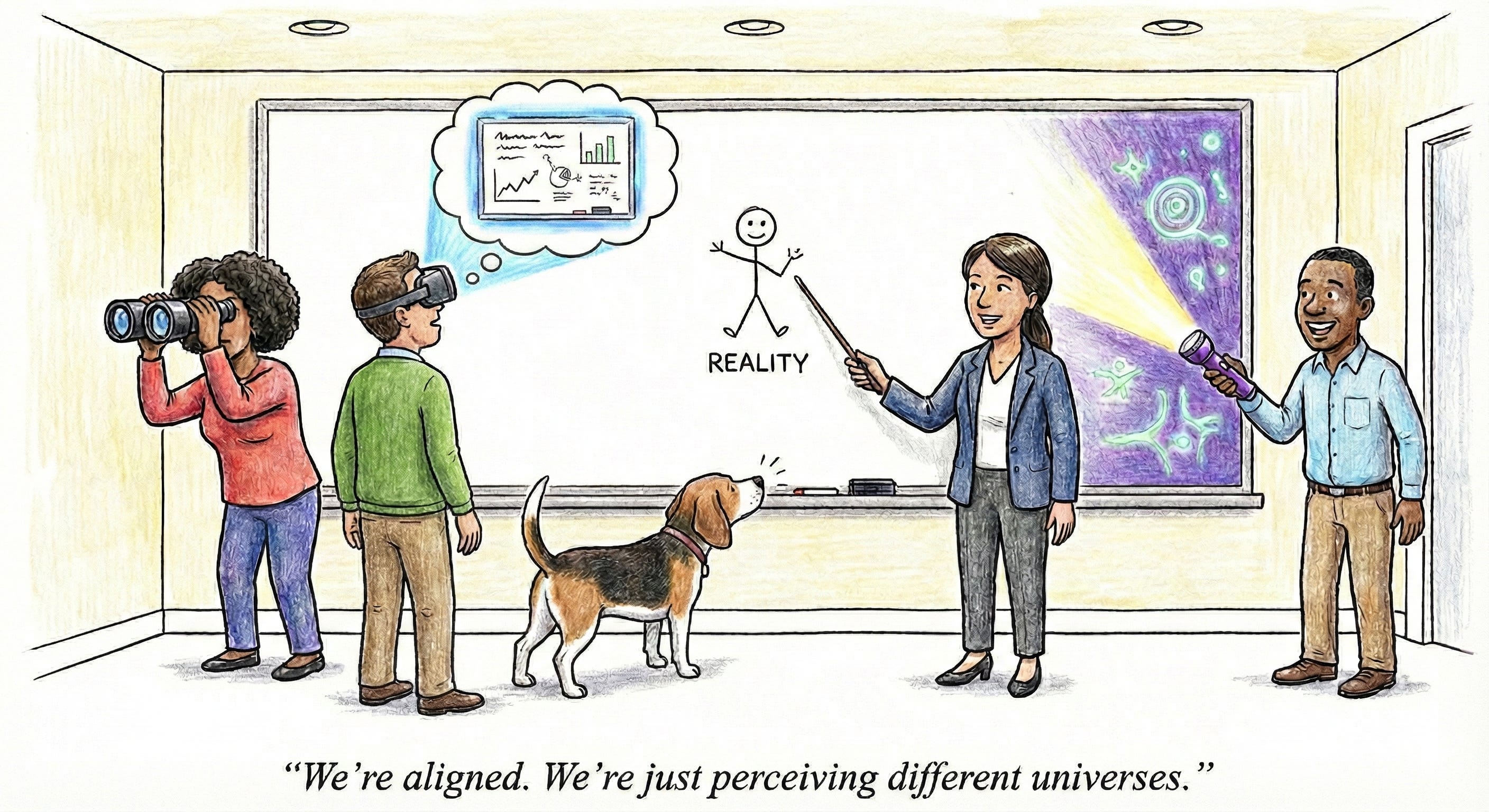
The end of the year can be a time of joy, a time of stress, and a time of retrospection. I’ve had my own share of joy in 2025 (such as checking out 6 countries1 I hadn’t been to before with family), certainly some non-holiday related stress, and time looking back at the year that was. That retrospection drives the topic for today - looking back at some of the articles I felt were most useful over the last year. As well as a brief foray into how important it is to continually challenge whether we’re really seeing things as they are, or how we just think (assume) they are.
I decided for a year end post to gather up what I see as the most valuable tools I wrote about this year. With the belief that there are ultra high leverage lessons buried in these occasionally goofy stories.
But first, I want to wish that 2026 brings everyone the gift of being able to see the nature of their problems clearly. That skill is something I’m always working on, and want to personally put a special focus on in 20262. Therefore, before I get to the part about the posts I recommend revisiting, and sharing, a brief but random exploration of the magic of focused sight.
The value of truly seeing (reality has a sensor bias)
It’s hard to understand reality beyond what we can see with the eyes we’re born with. Our perception of what is “real” is conditioned by our experience and sensing abilities. It takes real effort to imagine a reality we cannot experience directly. How a dog perceives reality with hyper accurate smell and limited color vision is going to differ widely from ours.
This is hard to picture in a simple way. Though adjusting how intently you inspect something with your eyes can give a taste. Bend the spoon yourself via a few simple exercises. The next time you’re at the gym with the comically large ceiling fans; first watch how fast the blades move. Then with your head still, visually lock on and track one. Watch time dilate before (literally) your eyes.
When you’re listening to your kid or spouse, really, truly zoom in on their face and catalog closely what they look like. It’s likely you’ll suddenly realize how much your brain filters out when you’re not deeply paying attention. That didn’t work? Try it with a neighbor or more casual friend.
It’s pretty wild isn’t it? Just picture how one would perceive reality with only hearing, or ultraviolet spectrum vision. Makes you wonder how sure we should be about our own “world models”? That not everything that is intuitive is also true should form an important plank when reasoning about situations and problems. Or put another way, it’s easy to miss that you’re wrong in a big way because of a subtle but fundamental assumption you’re making.
A simple example? Let’s pretend you interviewed for a job 5-6 months ago. Periodically the company reaches out to reassure you they’re interested and you’re their top choice. Based on the signal reaching your brain it seems a lot like this company is slow and deliberative, or maybe slow and a indecisive. Though - what if your assumption is too centered through your self importance in this story. Isn’t it equally likely they’ve been interviewing 30 other people, and offered it to 6 others first. Just leaving you waiting as they “figure out the right offer.” That shift in assumptions, or shift in seeing makes a huge difference doesn’t it? It’s not good or bad in an absolute sense3 - but it sure as heck might make a difference in how you approach things.
Reality is hard to see and can be easily warped in unhelpful ways by what your brain filters out and/or assumes.
The eyes - brain connection is one of those things that we take for granted but is a marvel of nature (or proof of a divine creator). Today you hear a lot of people throwing around “attention is all you need.” I’m not sure it’s “all” you need - but your attention (ie; focus) makes a huge difference in the physical personal world. Otherwise how can you explain those examples above - or how much you (or your kid’s) sports performance improves when one is reminded to look at the ball, puck or target. It takes an openness to seeing difference to try the suggestion to “really look”. But once achieved it can be a 10x change in one’s sports performance.
Aside from literal vision, it’s in my view even more important to remember that your workplace observations (aka your assumptions) are not necessarily reality. Breaking out of that requires asking questions with the deep curiosity which uncovers conflicting views. Beyond being curious, working with basic what/how questions, and more advanced tools such as the Theory of Constraint’s (TOC) current and future reality trees are a big help.
Which is my longwinded expression of that hope 2026 helps us all grow better better at questioning assumptions to find new, creative, and satisfying ways of solving problems together.
Signal in the noise - 2025 EOY edition
It’s been pointed out that my writing wandered all over the map. It’s almost as if I named this experiment “a random walk” for a reason. ;-)
All the writing has been personally fulfilling entertaining, but I’ve mainly been striving to get better and better at sharing what I view as a set of universal best practices for getting things done4.
Therefore, I took this end of the year to ask myself - What 2025 articles are mainly true signal amidst the noise? Here’s my best estimate. Please do share these with your friends and teams if you agree. They’re not intended in rank order - except the first, and maybe the second. Feel free to vote in the comments. 😊
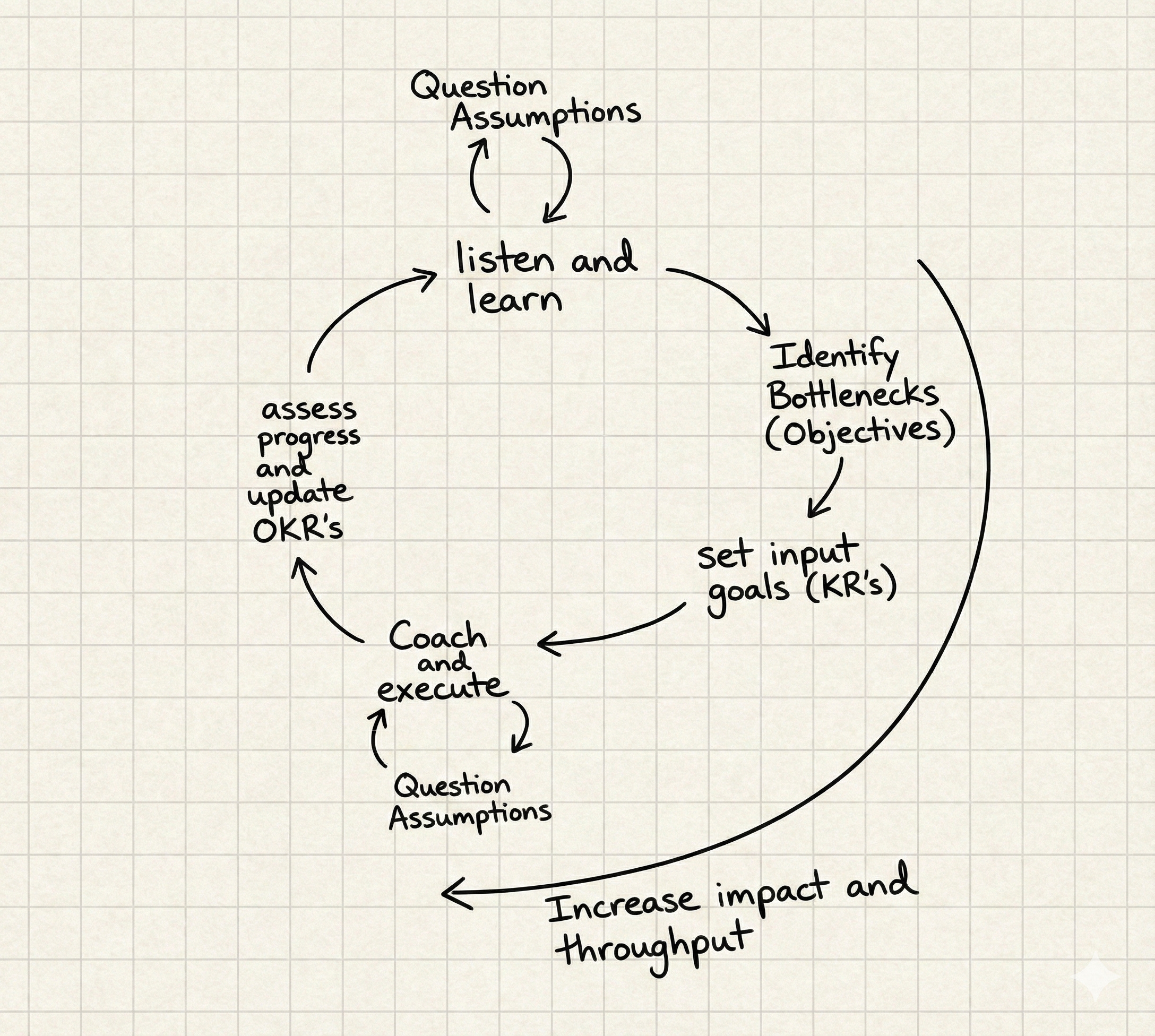
Creating a vision and setting controllable input goals: The way to ensure that what you’re doing seems worth doing after you’ve done it. With tips to figure out you’re wrong before you start. You know, the one with the napkin sketch5.
Keeping focus and prioritization: How to use your hard won focus to stay on track. If you’ve had “many, many” goals and a lot of multi-tasking ruining your life I hope this will offer some ways out.
Mechanisms to retain alignment but enable autonomy: How your teams organize and view their identity, and how they build decoupling API’s through Tenets are two things that seem nerdy. They are, but super helpfully nerdy.
How to get the best out of your Amazon experience when entering a new culture, and not being overwhelmed by the new Amazon asshole who’s suddenly you’re boss6. Part 1 and Part 2.
Cultural tools to learn from failure7: The Death Star wasn’t destroyed repeatedly due to rebel skill, or a lack of faith in The Force. A culture of fear and crappy post-mortems guaranteed we’d be seeing the same plot across so many films. I wrote about the engineering process themes in Star Wars as well as a more direct set of tools I’ve found incredibly useful in debugging failures big and small (but often big).
How to discuss tech debt as something non-engineers care about: Suggestions for engineering to share technical debt tradeoffs in terms of throughput, as way to gain shared buy in (or realize it really can wait). I’ve found this one of the most disciplined and useful ways to avoid the dreaded 35% of each sprint goes to engineering excellence fallacy.
Order Defect Rate: a true story of how nailing the right metric can help organizations operate with focus on a 20+ years running basis. Even if that metric is wrong in so many ways. Directional and helpful is better than precise and ignored or unactionable.
Understanding “the customer’s” problem: An example of how remembering a complaint that didn’t seem that big accidentally unlocked executive support and passion for a huge and important project. Teaching about the need to be expansive in finding customer pain points, and truly understanding the problem/pain on the other side of a negotiation or sales situation. To this day I’m continually surprised as to how easily we get stuck on our view of a problem and not other’s - this little nudge almost always makes things way better.
In closing, and paraphrasing George Costanza’s famous line8 - “You know, if you take everything I’ve accomplished in 2025 and smoosh it into one article, it looks decent.”
If you know someone who might benefit from these articles, please consider sharing. If you’d like an external view as you work through your 2026 goals I’m available to get into the weeds with you. Just reach out.
Wishing everyone who took the time to read this a great holiday season with those they love. And a healthy and happy 2026!
If you’re curious - Vietnam. Cambodia, Singapore, Spain, Morocco, Italy.
pun intended.
Many people hearing this example say they’d feel worse if 6 people had turned the role down first. Understandable, but it’s also possible your own leverage when they get to you might be better for the perceived (by you) humiliation. Your argument that their comp target is too low would have the weight of those first N people behind it.
Plus a chance to include goofy cartoons - because what’s the point of living in the future if I cannot make silly things with little talent or effort?
A special thanks to the folks over at Nano Banana for helping clean up my terrible handwriting with the updated example in this text.
I’m joking out course. 90% of ex-Amazonians think they’re not assholes, and only probably like 25% of them really are. Though I’m not sure you should trust my math as no one ever thinks they’re the asshole. Except that 10% of ex-Amazonian’s - those you should probably believe.
I feel like I could write a whole book about the epic struggle I had to create the Wile E. Coyote themed cartoon that accompanied this article. Information may want to be free, but ChatGPT occasionally worries a lot about rich corporations IP and doesn’t quite buy satirical fair use exceptions.
The actual line - “You know, if you take everything I’ve accomplished in my entire life and condense it down into one day, it looks decent.”